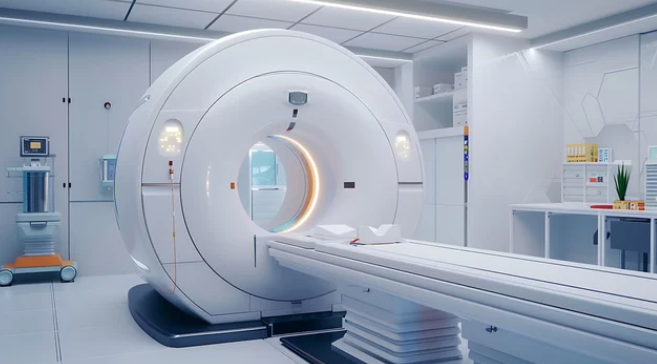
Magnetic Resonance Imaging (MRI) is one of the most advanced and trusted diagnostic tools in modern medicine. It is widely used to examine the brain, spine, joints, organs, and soft tissues with exceptional clarity. One of the most important advantages of MRI is that it works without ionizing radiation, making it a safer alternative to imaging methods such as X-rays and CT scans.
Understanding how MRI works without ionizing radiation helps patients make informed decisions and builds confidence in its safety. This article explains the science behind MRI, how it produces detailed images, and why it does not pose the same radiation risks associated with other imaging technologies.
What Is Ionizing Radiation and Why Does It Matter?
Ionizing radiation is a type of high-energy radiation that can remove electrons from atoms, a process known as ionization. This can damage cells and DNA, potentially increasing the risk of cancer with repeated exposure.
Common medical imaging techniques that use ionizing radiation include:
- X-rays
- CT (Computed Tomography) scans
- PET (Positron Emission Tomography) scans
While these tools are extremely valuable, their radiation exposure must be carefully managed. MRI stands apart because it does not rely on ionizing radiation at all.
The Core Principle of MRI Technology
MRI works by using three main components:
- A powerful magnetic field
- Radiofrequency (RF) waves
- Advanced computer processing
Together, these elements create highly detailed images of the body without exposing patients to radiation that can damage DNA.
The Role of the Strong Magnetic Field in MRI
Aligning Hydrogen Atoms
The human body is composed largely of water, which contains hydrogen atoms. Each hydrogen atom has a tiny magnetic property. When a patient enters an MRI scanner, the machine’s strong magnetic field causes these hydrogen atoms to align in a specific direction.
This magnetic alignment is the foundation of MRI imaging and does not involve any radiation exposure.
Why Strong Magnetic Fields Are Safe
Although MRI magnets are extremely powerful, magnetic fields themselves do not carry enough energy to break chemical bonds or damage genetic material. Extensive research has shown that static magnetic fields used in MRI are safe for the human body when proper safety guidelines are followed.
How Radiofrequency Waves Create MRI Signals
Sending and Receiving RF Pulses
Once the hydrogen atoms are aligned, the MRI machine sends short bursts of radiofrequency energy into the body. These RF waves temporarily disturb the alignment of the hydrogen atoms.
When the RF signal is turned off, the hydrogen atoms return to their original alignment. As they do, they release energy signals that are detected by the MRI scanner.
Why RF Waves Are Non-Ionizing
Radiofrequency waves are a form of non-ionizing electromagnetic radiation. They do not have enough energy to alter atomic structures or damage DNA. RF energy is also used safely in everyday technologies such as radios, mobile phones, and Wi-Fi networks.
Image Formation Without Radiation Exposure
Signal Processing and Image Reconstruction
The signals released by hydrogen atoms are collected and processed by powerful computers. These computers convert the signals into highly detailed, cross-sectional images of the body.
Different tissues release signals at different rates, allowing MRI to clearly distinguish between muscles, fat, organs, and abnormal tissues such as tumors.
Superior Soft Tissue Contrast
MRI’s ability to produce high-contrast images of soft tissues is one of its greatest strengths. This is achieved entirely through magnetic and RF interactions, not radiation exposure.
Why MRI Does Not Damage DNA
No Ionization Process
DNA damage occurs when radiation has enough energy to ionize atoms. MRI does not create ionization because it uses low-energy electromagnetic fields.
No Accumulated Radiation Risk
Unlike radiation-based imaging, MRI does not have cumulative effects. Patients can safely undergo multiple MRI scans over time without increasing their risk of radiation-related health problems.
MRI Compared to Radiation-Based Imaging
MRI vs. X-Rays
X-rays pass through the body and expose tissues to ionizing radiation. While doses are low, repeated exposure can add up. MRI avoids this entirely.
MRI vs. CT Scans
CT scans use multiple X-ray images to create detailed views, resulting in higher radiation exposure than standard X-rays. MRI provides comparable or superior detail for soft tissues without radiation.
MRI Safety for Repeated and Long-Term Use
Ideal for Chronic Conditions
MRI is commonly used to monitor chronic illnesses such as cancer, multiple sclerosis, and joint disorders. Its non-ionizing nature makes it ideal for repeated imaging over months or years.
Safe for Children and Young Adults
Children are more sensitive to radiation than adults. MRI is often the preferred imaging method in pediatric care because it eliminates radiation exposure during critical growth stages.
MRI Use During Pregnancy
MRI is generally considered safe during pregnancy when medically necessary. Because it does not use ionizing radiation, it poses no known risk to fetal DNA development.
Doctors may avoid contrast agents unless absolutely necessary, but the MRI scan itself is not associated with genetic or developmental harm.
The Role of MRI Contrast Agents
Some MRI scans use contrast agents to enhance image clarity.
Do Contrast Agents Involve Radiation?
No. MRI contrast agents work by altering magnetic properties, not by emitting radiation. Current scientific evidence does not link these agents to DNA damage.
Healthcare providers carefully evaluate the need for contrast to ensure patient safety.
Advanced MRI Techniques Without Radiation
Modern MRI technology includes advanced methods that further enhance diagnostic accuracy without adding risk:
- Functional MRI (fMRI) for brain activity
- Diffusion-weighted imaging (DWI) for cancer detection
- Cardiac MRI for heart function assessment
- Whole-body MRI for disease screening
All of these techniques rely on the same non-ionizing principles.
Common Myths About MRI and Radiation
Myth 1: MRI Emits Hidden Radiation
MRI does not emit ionizing radiation in any form.
Myth 2: Strong Magnets Are Dangerous to Cells
Magnetic fields do not damage cells or DNA.
Myth 3: Multiple MRI Scans Increase Cancer Risk
There is no scientific evidence linking MRI scans to increased cancer risk.
International Safety Standards for MRI
MRI systems operate under strict international safety guidelines that regulate magnetic field strength, RF exposure, and scan duration. Continuous monitoring ensures patient safety at all times.
These standards are regularly updated as technology evolves.
The Future of MRI Technology
Advancements in MRI continue to focus on faster scan times, improved image quality, and greater patient comfort. Artificial intelligence and automation are also enhancing image interpretation while maintaining the same radiation-free principles.
Future MRI systems are expected to further expand diagnostic capabilities without compromising safety.
Conclusion: Why MRI Works Safely Without Ionizing Radiation
MRI works without ionizing radiation by using a combination of strong magnetic fields, radiofrequency waves, and sophisticated computer processing. This approach allows for detailed, high-quality imaging without the DNA damage risks associated with radiation-based scans.
As a result, MRI remains one of the safest and most powerful imaging technologies in modern medicine. Its radiation-free design makes it ideal for diagnosis, treatment planning, and long-term monitoring across all age groups.
Also Read :