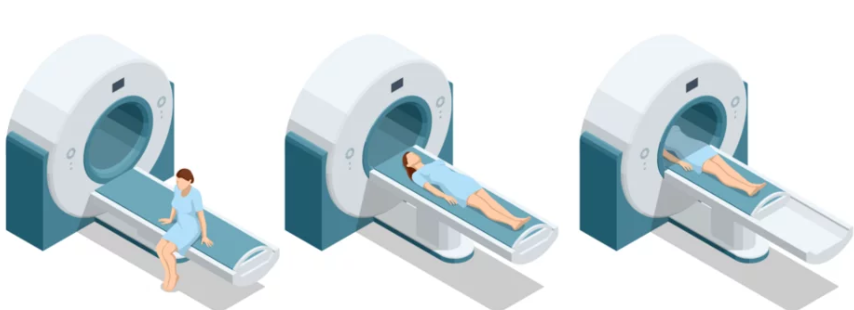
Magnetic Resonance Imaging (MRI) has become a cornerstone in cancer diagnosis and treatment planning due to its superior soft tissue contrast and functional imaging capabilities. However, misconceptions persist about its safety, effectiveness, and role compared to other modalities. This article aims to distinguish well-supported scientific evidence from assumptions and misconceptions.
The Evidence-Based Role of MRI in Cancer Detection
What MRI Does Well
- High Soft Tissue Contrast: Enables detailed visualization of brain, liver, prostate, breast, and pelvic tumors.
- Functional Imaging: Techniques like diffusion-weighted imaging (DWI) and dynamic contrast-enhanced MRI improve tumor characterization.
- No Ionizing Radiation: Safer for repeated use, especially in young or vulnerable populations.
Limitations and Assumptions
- Assumption: MRI can replace all other imaging modalities for cancer detection.
- Reality: MRI is highly effective for certain cancers but less so for others (e.g., lung cancer detection, where CT is superior). It is often used complementarily.
- Assumption: MRI alone is sufficient for definitive diagnosis.
- Reality: Biopsy remains the gold standard; MRI guides but does not replace histopathology.
Common Misconceptions About MRI and Cancer
1. “MRI causes cancer”
- Fact: MRI uses magnetic fields and radiofrequency energy, not ionizing radiation. There is no evidence that MRI exposure causes cancer.
- Assumption: Because MRI involves strong magnets, it might be carcinogenic.
- Reality: Studies have shown no increased cancer risk from MRI scans (Neal et al., 2019).
2. “Gadolinium contrast agents are unsafe”
- Fact: Gadolinium-based contrast agents are generally safe when used appropriately.
- Misconception: Gadolinium accumulates in the brain and causes harm.
- Evidence: While gadolinium retention in tissues has been observed, current evidence does not conclusively link it to adverse health effects. Regulatory bodies recommend cautious use, especially in patients with kidney issues.
3. “MRI is too expensive and inaccessible”
- Reality: MRI is costly and less available than other modalities like ultrasound or X-ray, but ongoing technological advances and cost reductions are improving access.
- Assumption: Its high cost outweighs benefits.
- Evidence: The detailed information provided by MRI can lead to more accurate diagnoses, potentially reducing unnecessary procedures and improving outcomes.
4. “MRI is unsafe for pregnant women”
- Fact: No conclusive evidence suggests harm from MRI during pregnancy.
- Guidelines: MRI is generally avoided in the first trimester unless necessary, and gadolinium contrast is avoided during pregnancy unless absolutely required.
The Evidence for MRI’s Effectiveness in Cancer Management
- Detection: MRI can detect tumors early and accurately in specific organs.
- Staging: Provides detailed information about tumor size, extent, and involvement of adjacent structures.
- Monitoring: Useful in assessing treatment response and detecting recurrence, with minimal risk from repeated scans.
Key Studies and Guidelines
- Breast MRI: Highly sensitive for detecting additional lesions in high-risk women (Kuhl et al., 2010).
- Prostate MRI: Provides better localization and staging, guiding biopsies (Peters et al., 2018).
- Brain Tumors: MRI is the gold standard for initial diagnosis and follow-up.
Future Directions: Evidence-Based Innovations
- Advanced MRI techniques like molecular imaging and radiomics are under investigation to improve specificity.
- AI integration aims to enhance diagnostic accuracy further.
Conclusion: Separating Fact from Fiction
- MRI does not cause cancer and is safe when used appropriately.
- It is a powerful, non-invasive tool that complements other diagnostic methods.
- Its limitations are real and should be understood; it is not a universal solution but a critical component of cancer management.
- Ongoing research continues to refine its applications, ensuring that clinical decisions are grounded in evidence.
Also Read :