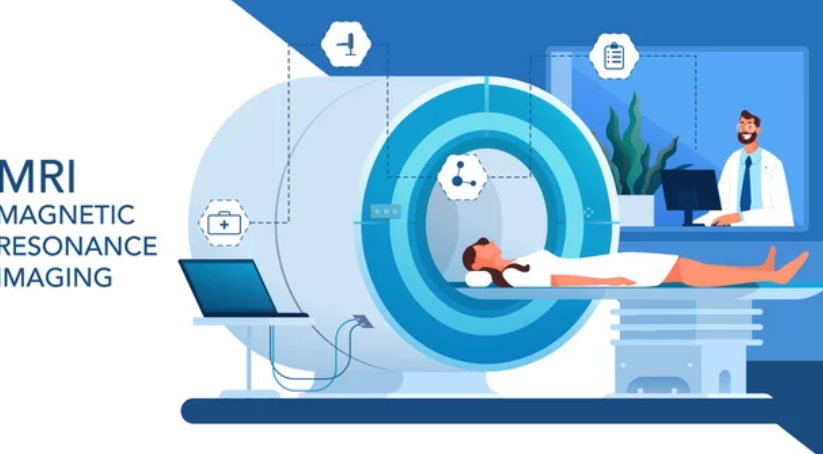
Magnetic Resonance Imaging (MRI) is a cornerstone of modern medical diagnostics, providing detailed images of organs, tissues, and internal structures without using ionizing radiation. To enhance the visibility of certain tissues or detect abnormalities more clearly, healthcare providers sometimes use contrast dyes, commonly called contrast agents. While these agents greatly improve diagnostic accuracy, some patients worry about their safety and whether they could increase cancer risk.
This article examines MRI contrast dyes, reviews their safety profile, and explains what scientific research says about cancer concerns, helping patients and clinicians make informed decisions.
What Are MRI Contrast Dyes?
MRI contrast agents are substances that improve the visibility of internal structures on MRI scans. The most widely used agents are gadolinium-based contrast agents (GBCAs).
How They Work
- Gadolinium is a metal that enhances the magnetic properties of nearby hydrogen atoms
- When injected into the bloodstream, it temporarily alters the MRI signal
- This allows radiologists to see abnormalities such as tumors, blood vessel issues, inflammation, or organ lesions more clearly
Contrast dyes are particularly useful for:
- Detecting cancerous tumors
- Assessing blood flow in the brain and heart
- Visualizing joint or organ abnormalities
- Evaluating inflammatory or vascular conditions
Are MRI Contrast Dyes Safe?
Decades of Clinical Use
Gadolinium-based contrast agents have been used in millions of MRI scans worldwide. Large-scale studies and long-term clinical experience show:
- Minimal short-term side effects, usually mild reactions like nausea or headache
- Rare allergic reactions, which are typically mild and treatable
- No proven increase in cancer risk when used according to guidelines
Regulatory Oversight
The FDA, EMA, and other health authorities closely monitor contrast agent safety. They provide:
- Approved usage guidelines
- Dosage limits
- Recommendations for patients with kidney issues
These regulations ensure contrast agents are used safely for both adults and children.
Gadolinium Retention: What Patients Need to Know
Retention in the Body
Some studies have shown that small amounts of gadolinium can remain in tissues, particularly the brain, for months or years. Key points from research:
- No clinical evidence links retained gadolinium to cancer
- No long-term health consequences have been proven in patients with normal kidney function
- Retention is less of a concern with macrocyclic GBCAs, which are more stable than older linear agents
Kidney Safety
Patients with severe kidney disease are at higher risk of complications, such as nephrogenic systemic fibrosis (NSF). For these patients:
- Alternative imaging methods may be recommended
- Careful dose selection is critical
For patients with healthy kidney function, gadolinium contrast is generally considered safe.
MRI Contrast Dyes and Cancer Risk
Why Concern About Cancer Arises
Cancer concerns often arise because some imaging agents contain metals. However:
- Gadolinium is non-radioactive and does not emit ionizing radiation
- MRI contrast dyes do not break DNA or induce mutations
What Large Studies Show
- Population studies of patients receiving GBCAs have found no increase in cancer incidence
- Long-term follow-up confirms no evidence of carcinogenic effects
- Pediatric studies similarly show safety for children requiring contrast-enhanced MRI
In short, there is no credible scientific evidence linking MRI contrast dyes to cancer.
Pediatric Use of Contrast Agents
Children may require contrast-enhanced MRI for conditions such as:
- Brain or spinal abnormalities
- Congenital heart defects
- Tumor evaluation and monitoring
Research shows:
- No long-term cancer risk from contrast-enhanced MRI
- Safety is optimized by using the lowest effective dose
- Pediatric MRI protocols follow strict international guidelines
Safety Tips for Patients
Before receiving an MRI contrast agent, patients should:
- Inform the radiologist of any kidney problems
- Discuss allergies or prior reactions to contrast agents
- Follow instructions for hydration, which can help eliminate the agent
- Ask about alternative MRI techniques if concerned
Healthcare providers tailor decisions based on patient health and diagnostic needs, ensuring maximum safety.
Advances in Contrast Agent Safety
Research continues to improve MRI contrast dyes:
- Macrocyclic agents reduce gadolinium retention
- Lower-dose protocols achieve high-quality images with minimal exposure
- New agents and techniques are being developed for faster, safer imaging
These innovations enhance both safety and diagnostic accuracy.
Addressing Common Myths
Myth 1: MRI Contrast Causes Cancer
Fact: Studies and decades of clinical use show no link between gadolinium-based contrast and cancer.
Myth 2: All Gadolinium Is Harmful
Fact: Modern macrocyclic agents are stable and safe, particularly for patients with normal kidney function.
Myth 3: MRI Contrast Should Be Avoided at All Costs
Fact: The benefits of contrast-enhanced MRI often outweigh minimal risks, especially for detecting tumors or vascular abnormalities.
Conclusion: MRI Contrast Dyes Are Safe and Cancer-Free
Gadolinium-based MRI contrast agents have proven to be safe, effective, and essential in modern diagnostics. Large-scale studies, long-term follow-up, and pediatric research consistently show no link to cancer. While mild side effects and very rare allergic reactions can occur, regulatory oversight, dosage guidelines, and modern contrast agent formulations ensure patient safety.
For patients needing detailed imaging, MRI with contrast remains one of the safest and most powerful diagnostic tools, providing critical information without introducing cancer risk.
Also Read :