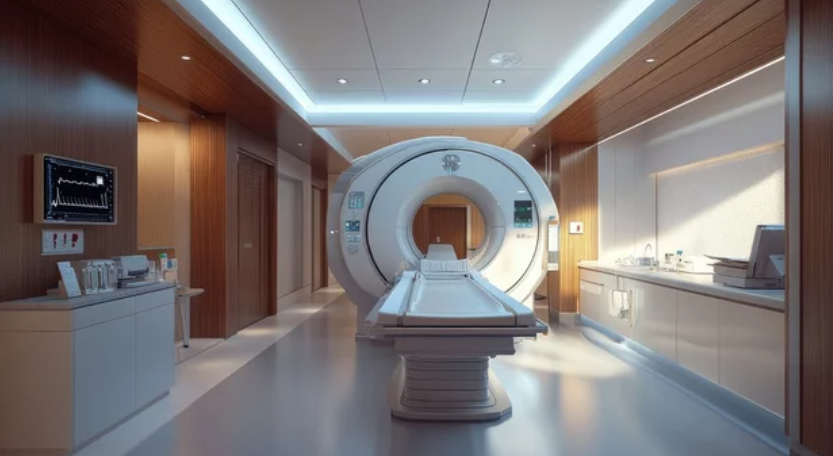
Magnetic Resonance Imaging (MRI) has revolutionized modern healthcare, offering detailed, non-invasive insights into the human body. From diagnosing neurological conditions to monitoring cancer treatment, MRI is an indispensable tool for millions of patients worldwide. Despite its proven benefits, many people express concern about potential cancer risks associated with MRI scans. These concerns often arise from misunderstandings about how MRI works and how it differs from other imaging technologies.
This article examines the most common public concerns, explains the science behind MRI, and provides evidence-based reassurance regarding cancer safety.
Why People Worry About MRI and Cancer
Public concern about MRI and cancer primarily stems from:
- Association with “strong magnets” – People assume that strong magnetic fields can damage cells or DNA.
- Confusion with radiation-based imaging – Many patients conflate MRI with X-rays or CT scans, which use ionizing radiation linked to cancer risk.
- Misinterpretation of medical reports or media articles – Headlines about gadolinium retention or high-field MRI may create anxiety.
Understanding these sources of concern helps explain why misconceptions persist.
How MRI Works: Non-Ionizing and Safe
Magnetic Fields and Radiofrequency Energy
MRI uses:
- Strong static magnetic fields to align hydrogen atoms in the body
- Gradient magnetic fields to provide spatial resolution
- Radiofrequency (RF) energy to generate imaging signals
Unlike X-rays and CT scans, MRI does not use ionizing radiation, the type that can break DNA and trigger mutations leading to cancer.
Key Safety Takeaways
- MRI magnetic fields cannot damage DNA
- RF energy produces minimal, controlled tissue heating
- Modern MRI systems strictly regulate exposure levels
These factors make MRI inherently safe with respect to cancer risk.
Addressing Specific Public Concerns
Concern 1: “Strong magnets can cause cancer”
Fact: Static magnetic fields, even at strengths used in MRI scanners (1.5T–3T), do not damage DNA or cause cancer. Large studies of MRI patients and healthcare workers show no increase in cancer incidence attributable to MRI exposure.
Concern 2: “Gadolinium contrast dyes are dangerous”
Fact: Gadolinium-based contrast agents (GBCAs) enhance MRI image quality. Research shows:
- No evidence linking GBCAs to cancer
- Retention of gadolinium in tissues occurs, but no harmful effects have been demonstrated in patients with normal kidney function
- Use is guided by strict safety protocols
Modern macrocyclic agents are particularly safe and stable, reducing any potential risk.
Concern 3: “Repeated MRI scans could be harmful”
Fact: Unlike ionizing radiation, MRI exposure does not accumulate over time. Patients requiring multiple scans—for example, children with chronic conditions or cancer survivors—face no cumulative cancer risk from MRI.
Evidence from Large-Scale Studies
Population-Based Research
Studies involving millions of MRI scans worldwide show:
- No increase in cancer among patients exposed to MRI
- No long-term DNA damage attributable to MRI
- Safe use even with repeated or long-term imaging
Pediatric Research
Children are often more sensitive to environmental exposures. Large pediatric studies confirm:
- MRI is safe for children and infants
- No increased cancer risk has been observed
- Repeated scans over years remain safe
Occupational Studies
Healthcare professionals working in MRI environments are exposed to strong magnetic fields daily. Research indicates:
- No elevated cancer rates
- No neurological or reproductive risks
- Long-term occupational exposure is safe under standard protocols
Clarifying Misconceptions
Myth 1: MRI exposure builds up over time
Reality: MRI does not use radiation; it cannot accumulate in the body.
Myth 2: High-field MRI is unsafe
Reality: Ultra-high-field MRI (7T and above) is being studied, but existing safety protocols protect patients, and no cancer risk has been identified.
Myth 3: MRI contrast agents cause cancer
Reality: Large-scale clinical studies and long-term follow-up show no link between contrast use and cancer development.
Why Public Awareness and Education Matter
Despite overwhelming scientific evidence, public concern persists due to:
- Media misinterpretation
- Fear of new technologies
- Lack of understanding of non-ionizing vs. ionizing radiation
Educating patients about how MRI works, its safety profile, and the difference from X-rays or CT scans is crucial for reducing anxiety and ensuring informed decisions.
Safety Measures in Place
Medical facilities implement multiple layers of safety:
- International guidelines for exposure limits
- Patient screening for metal implants and kidney function
- Controlled use of contrast agents
- Monitoring of RF energy to prevent excessive heating
These measures ensure MRI remains both highly effective and safe for patients of all ages.
The Bottom Line: MRI and Cancer Risk
Scientific research consistently shows:
- MRI does not increase cancer risk
- MRI is safe for repeated use
- Contrast-enhanced MRI is safe when used according to guidelines
- Children and adults alike can undergo MRI scans without fear of cancer
MRI’s non-ionizing nature, combined with decades of safety research and strict regulatory oversight, makes it one of the safest imaging modalities available today.
Conclusion
Public concerns about MRI and cancer are understandable but largely based on misconceptions. Strong evidence from large population studies, pediatric research, and occupational monitoring confirms that MRI is safe, even for repeated scans and contrast-enhanced studies. Educating patients about the science behind MRI, non-ionizing radiation, and safety protocols can help alleviate fear and reinforce confidence in this essential diagnostic tool.
Also Read :