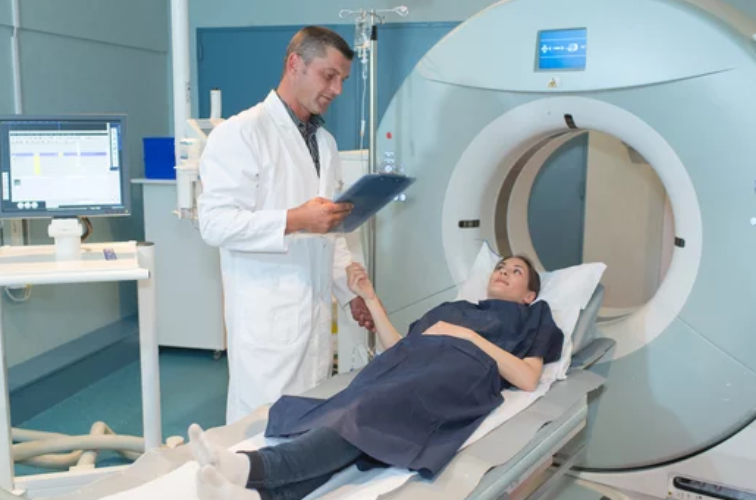
Magnetic Resonance Imaging (MRI) is one of the most widely used diagnostic tools in modern medicine, praised for its detailed images and absence of ionizing radiation. However, questions about its safety, especially regarding long-term effects, have persisted. This overview synthesizes current research to evaluate the safety profile of MRI scans.
Principles of MRI Safety
MRI utilizes:
- Strong Magnetic Fields: Typically 1.5 to 3 Tesla, with some systems up to 7 Tesla or higher.
- Radiofrequency (RF) Pulses: To excite hydrogen nuclei in tissues.
- Gradients: To spatially encode the signals.
Unlike X-ray or CT scans, MRI does not emit ionizing radiation, which is a primary concern in radiation-induced carcinogenesis.
Safety Aspects of MRI
1. Absence of Ionizing Radiation
- Current Evidence: MRI is considered safe regarding radiation exposure, making it suitable for repeated scans, children, pregnant women, and vulnerable populations.
- Research Findings: Epidemiological studies show no increased cancer risk associated with MRI scans (Neal et al., 2019).
2. Static Magnetic Field Exposure
- Potential Risks: While static fields are generally safe, extremely strong fields (>8 Tesla) are under investigation for long-term effects.
- Research Findings: No definitive evidence links static field exposure at clinical strengths (~1.5-3T) to adverse health outcomes (WHO, 2014).
3. RF Energy and Heating
- Mechanism: RF pulses can cause tissue heating (specific absorption rate, SAR).
- Safety Measures: MRI protocols adhere to SAR limits to prevent burns or discomfort.
- Research Findings: Minor burns have occasionally been reported due to metallic objects or improper protocols, but these are rare and preventable.
4. Gradient Magnetic Fields
- Potential Risks: Induce currents that may interfere with electronic devices or cause nerve stimulation.
- Research Findings: When protocols follow safety guidelines, adverse effects are minimal. Patients with pacemakers or metallic implants require careful assessment.
5. Contrast Agents (Gadolinium-Based)
- Usage: Enhances imaging of blood vessels and tissues.
- Potential Risks: Allergic reactions are rare; nephrogenic systemic fibrosis (NSF) in patients with severe kidney disease; gadolinium retention in tissues.
- Research Findings: Gadolinium retention in the brain has been observed, but no conclusive evidence links it to adverse health effects. Guidelines now recommend cautious use in at-risk populations.
6. Psychological and Physical Discomfort
- Claustrophobia, noise, and need for patient immobility can cause discomfort.
- Mitigation: Open MRI systems, noise-canceling headphones, and sedation are options.
Special Considerations
- Pregnancy: No conclusive evidence suggests harm, but routine use is generally avoided during pregnancy unless necessary.
- Pediatric Patients: Safe when protocols are adapted; no evidence of long-term harm.
- Metal Implants and Devices: Compatibility must be verified; some devices can pose risks or be affected by magnetic fields.
Summary of Evidence
| Aspect | Safety Profile | References |
|---|---|---|
| Radiation | No ionizing radiation | WHO, 2014 |
| Static magnetic fields | No adverse effects at clinical strengths | Neal et al., 2019 |
| RF energy | Controlled to prevent heating | FDA guidelines |
| Contrast agents | Rare adverse reactions; NSF risk in renal impairment | ACR, 2020 |
| Overall | Considered very safe when protocols are followed | Multiple peer-reviewed studies |
Conclusion
Based on current scientific evidence, MRI scans are remarkably safe for most patients. The absence of ionizing radiation, combined with strict safety standards and protocols, minimizes risks. However, awareness of potential issues—such as contrast agent reactions, metallic implants, and patient comfort—is essential for safe practice. Ongoing research continues to monitor long-term safety, reinforcing MRI’s role as a safe diagnostic modality.
Also Read :