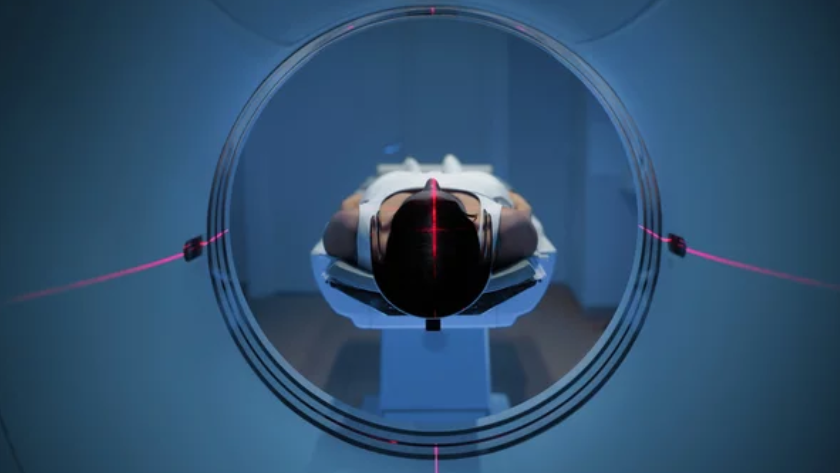
Magnetic Resonance Imaging (MRI) is a powerful diagnostic tool that relies on complex physical principles to generate detailed images of the body’s internal structures. Understanding the physics behind MRI helps clarify its safety profile and dispels misconceptions about its biological effects.
The Physics of MRI
1. Basic Principles
- Magnetic Fields: MRI uses a strong, static magnetic field (usually 1.5 to 3 Tesla) to align hydrogen protons in the body.
- Radiofrequency (RF) Pulses: These are applied to excite the aligned protons, causing them to emit signals as they relax back to their original state.
- Gradient Fields: Variations in magnetic fields spatially encode the signals, allowing image reconstruction.
2. Key Physical Phenomena
- Nuclear Magnetic Resonance (NMR): The fundamental principle where nuclei with magnetic moments (like hydrogen) absorb and emit RF energy in a magnetic field.
- Larmor Frequency: The specific RF frequency at which nuclei resonate, proportional to the magnetic field strength.
- Relaxation Times (T1 and T2): Time constants describing how quickly protons return to equilibrium, influencing image contrast.
3. Image Formation
- By manipulating magnetic gradients and RF pulses, MRI machines produce signals that are processed into detailed images of tissues.
Biological Effects of MRI: What the Physics Means
1. Static Magnetic Fields
- Effect: The strong magnetic field aligns protons but does not cause ionization or damage.
- Biological Impact: No evidence suggests static fields at clinical strengths cause harm. Some transient effects like dizziness or nausea are rare and related to magnetophosphenes (visual phenomena).
2. Radiofrequency (RF) Energy
- Effect: RF pulses can cause tissue heating (thermal effects).
- Safety Measures: MRI protocols regulate RF power (Specific Absorption Rate – SAR) to prevent excessive heating.
- Biological Impact: When standards are followed, RF energy does not produce tissue damage or long-term effects.
3. Gradient Magnetic Fields
- Effect: Rapidly switching gradients can induce electric currents, potentially stimulating nerves or muscles.
- Biological Impact: Under normal conditions, these effects are minimal and controlled by safety guidelines.
4. Gadolinium-Based Contrast Agents
- Effect: Gadolinium is a paramagnetic metal used to enhance images.
- Potential Biological Effects: Gadolinium can deposit in tissues, including the brain, but current evidence does not confirm harmful effects in patients with normal kidney function.
Are There Long-Term Biological Effects?
- Epidemiological Evidence: Extensive studies show no increase in cancer risk or other long-term health effects from MRI exposure.
- Research Consensus: Modern MRI practices are considered safe, with benefits outweighing potential risks.
Summary of Safety and Physics
| Aspect | Physical Basis | Biological Effect | Safety Status |
|---|---|---|---|
| Static magnetic field | Aligns protons | No harm | Safe at clinical levels |
| RF energy | Causes tissue heating | No long-term damage when regulated | Safe with protocols |
| Gradient fields | Induce electric currents | Minimal nerve stimulation | Safe when guidelines are followed |
| Contrast agents | Gadolinium enhances images | Rare adverse effects | Generally safe |
Conclusion
The physics of MRI—centered on magnetic fields, RF energy, and signal processing—underpins its effectiveness and safety. When operated within established safety guidelines, MRI poses minimal biological risks, making it a reliable and non-invasive diagnostic tool.
Also Read :