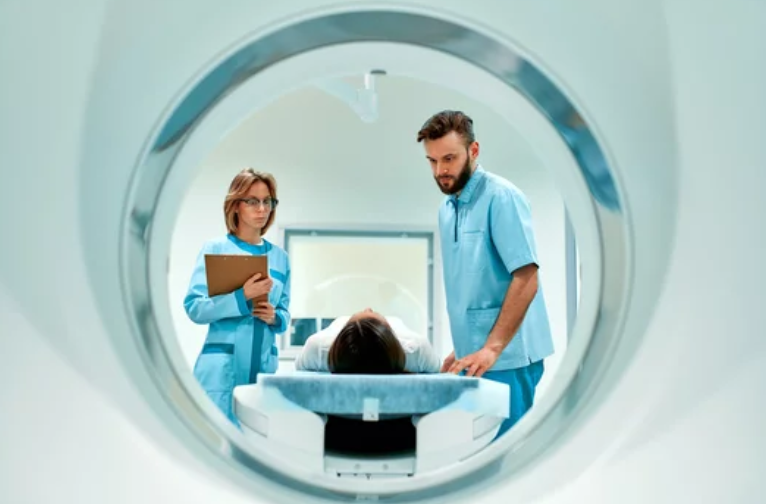
Medical imaging has revolutionized healthcare, allowing doctors to diagnose diseases earlier, guide treatments more accurately, and monitor patient progress with precision. Among the most commonly used imaging techniques are MRI (Magnetic Resonance Imaging), CT (Computed Tomography) scans, and X-rays. While all three play vital roles in modern medicine, patients often ask an important question: How do MRI, CT, and X-ray compare in terms of cancer risk?
This concern is understandable, especially as awareness of radiation exposure and long-term health effects continues to grow. This article provides a clear, evidence-based comparison of MRI, CT, and X-ray cancer risks, helping patients and healthcare professionals make informed decisions about medical imaging.
Why Cancer Risk Is Discussed in Medical Imaging
Cancer risk in medical imaging is primarily associated with ionizing radiation. Ionizing radiation has enough energy to damage DNA, potentially increasing the risk of cancer over time, particularly with repeated exposure.
Not all imaging technologies use ionizing radiation. Understanding which scans involve radiation—and which do not—is key to understanding their relative cancer risks.
Overview of MRI, CT, and X-ray Imaging
What Is MRI?
MRI uses strong magnetic fields, radiofrequency (RF) waves, and computer processing to create detailed images of the body. It is especially effective for imaging soft tissues such as the brain, spinal cord, muscles, and organs.
Key characteristic:
- Does not use ionizing radiation
What Is a CT Scan?
A CT scan uses multiple X-ray beams taken from different angles to produce detailed cross-sectional images. CT scans are fast and highly effective for detecting internal injuries, cancers, and complex conditions.
Key characteristic:
- Uses ionizing radiation (higher dose than standard X-rays)
What Is an X-ray?
X-rays pass ionizing radiation through the body to produce images of bones and some organs. They are quick, widely available, and commonly used for fractures, chest exams, and dental imaging.
Key characteristic:
- Uses ionizing radiation (lower dose than CT scans)
Ionizing Radiation and Cancer Risk Explained
Ionizing radiation can damage DNA by breaking chemical bonds. While the body can repair most DNA damage, repeated or high-dose exposure increases the chance of permanent mutations, which may contribute to cancer development later in life.
Cancer risk from medical imaging is generally low, but it varies depending on:
- Type of imaging
- Radiation dose
- Frequency of scans
- Patient age (children are more sensitive)
MRI and Cancer Risk
Does MRI Increase Cancer Risk?
No. MRI does not increase cancer risk.
MRI does not use ionizing radiation, which means it does not damage DNA or cause radiation-related mutations. Extensive research over several decades has found no credible evidence linking MRI scans to cancer.
Why MRI Is Considered the Safest Option
- No radiation exposure
- No cumulative cancer risk
- Safe for repeated and long-term use
- Preferred for children and young adults
For patients requiring frequent imaging—such as those with cancer, neurological disorders, or chronic diseases—MRI is often the safest choice when clinically appropriate.
CT Scans and Cancer Risk
How CT Scans Contribute to Radiation Exposure
CT scans use X-rays, but at significantly higher doses than standard X-ray exams. A single CT scan can deliver radiation equivalent to many conventional X-rays.
Cancer Risk from CT Scans
Studies suggest that repeated CT scans may slightly increase lifetime cancer risk, particularly in children and young adults. However, the risk from a single CT scan is still considered very small.
When CT Scans Are Justified
Despite their higher radiation dose, CT scans are extremely valuable because they:
- Provide fast, detailed imaging
- Are lifesaving in emergencies
- Detect cancers and internal injuries effectively
When medically justified, the benefits of CT scans far outweigh the potential risks.
X-rays and Cancer Risk
Radiation Levels in X-rays
X-rays use lower doses of ionizing radiation compared to CT scans. A single chest X-ray delivers a very small amount of radiation.
Cancer Risk from X-rays
The cancer risk from occasional X-rays is extremely low. However, repeated or unnecessary X-ray exposure over time can slightly increase cumulative radiation dose.
Why X-rays Remain Widely Used
- Quick and accessible
- Low cost
- Effective for bones and chest imaging
Healthcare providers carefully limit X-ray use to situations where the diagnostic benefit is clear.
Comparing Cancer Risks: MRI vs. CT vs. X-ray
Radiation Exposure Comparison
- MRI: No ionizing radiation, no cancer risk
- X-ray: Low radiation, minimal cancer risk
- CT scan: Higher radiation, small increased cancer risk with repeated use
Cumulative Risk Considerations
MRI does not contribute to cumulative radiation exposure. CT scans and X-rays do, which is why clinicians track imaging history and follow radiation safety principles.
Special Considerations for Children and Young Adults
Children are more sensitive to ionizing radiation because their cells divide more rapidly and they have a longer lifetime ahead for potential effects to appear.
Imaging Choices in Pediatrics
- MRI is preferred when possible
- CT scans are used only when necessary
- X-ray doses are minimized and adjusted for size
Research shows no increased cancer risk from MRI in children, reinforcing its role as the safest imaging option.
Imaging During Pregnancy and Cancer Risk
Ionizing radiation is generally avoided during pregnancy unless absolutely necessary.
MRI in Pregnancy
- Does not use radiation
- No evidence of increased cancer risk or birth defects
- Often preferred when imaging is needed
CT and X-rays in Pregnancy
- Used only when benefits outweigh risks
- Shielding and dose reduction techniques are applied
Why Doctors Still Use CT and X-rays Despite Radiation Risk
While MRI is the safest in terms of cancer risk, it is not always the best tool for every situation.
CT scans and X-rays are used because they:
- Are faster in emergencies
- Are better for certain conditions (e.g., lung imaging, trauma)
- Are more widely available
Doctors follow the principle of “as low as reasonably achievable” (ALARA) to minimize radiation exposure.
Advances Reducing Cancer Risk in Medical Imaging
Modern imaging technology has significantly reduced radiation doses:
- Low-dose CT protocols
- Digital X-ray systems
- Improved image processing
- Better patient screening
These advances continue to lower cancer risk while preserving diagnostic accuracy.
Common Myths About Imaging and Cancer Risk
Myth 1: Any Imaging Scan Causes Cancer
Not true. MRI does not cause cancer, and cancer risk from X-rays and CT scans is very low when used appropriately.
Myth 2: MRI Is Dangerous Because of Strong Magnets
Magnetic fields do not damage DNA or cause cancer.
Myth 3: CT Scans Should Always Be Avoided
CT scans are safe when medically necessary and often lifesaving.
Making Informed Imaging Decisions
Patients should feel comfortable discussing imaging choices with their healthcare providers. Important questions include:
- Is this scan necessary?
- Are there non-radiation alternatives like MRI?
- How will this scan help my diagnosis or treatment?
Shared decision-making ensures the safest and most effective imaging approach.
Conclusion: Comparing MRI, CT, and X-ray Cancer Risks
When comparing MRI, CT, and X-ray cancer risks, the differences are clear:
- MRI has no cancer risk because it does not use ionizing radiation
- X-rays carry a very low risk when used occasionally
- CT scans involve higher radiation, with a small increased cancer risk when used repeatedly
All three imaging tools are valuable and safe when used appropriately. MRI stands out as the safest option for repeated and long-term imaging, while CT and X-rays remain essential for fast and accurate diagnosis in many clinical situations.
Understanding these differences empowers patients to make informed healthcare decisions and builds confidence in modern medical imaging.
Also Read :