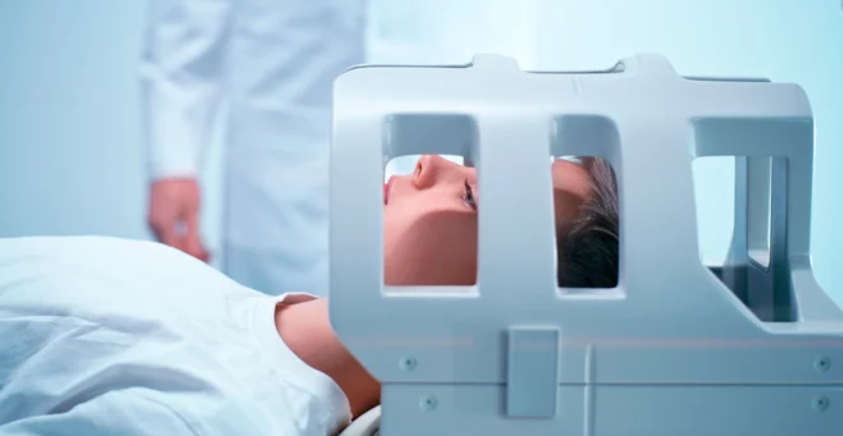
Magnetic Resonance Imaging (MRI) is widely regarded as one of the safest imaging techniques available, offering detailed internal body images without the use of ionizing radiation. However, questions about the potential for MRI to increase cancer risk persist among patients and even some healthcare professionals. Understanding the evidence is critical for informed medical decisions, especially for individuals who require repeated imaging, such as children, cancer survivors, or patients with chronic conditions.
This article examines the available data, explains how MRI works, and evaluates whether MRI exposure is associated with any increased cancer risk.
How MRI Works: Non-Ionizing Imaging Technology
MRI creates detailed images using magnetic fields and radiofrequency (RF) energy:
- Static magnetic fields align hydrogen atoms in the body.
- Gradient magnetic fields encode spatial information for imaging.
- RF pulses excite the aligned atoms, producing signals that computers convert into images.
Unlike X-rays or CT scans, MRI does not use ionizing radiation, the type of energy known to damage DNA and increase cancer risk. This fundamental distinction is key to understanding why MRI is considered low-risk.
Understanding Cancer Risk in Medical Imaging
Cancer risk in imaging primarily arises from ionizing radiation, which can:
- Break DNA strands
- Cause mutations in cells
- Increase cancer incidence with repeated exposure
X-rays and CT scans carry measurable cancer risk if used frequently, particularly in children. MRI, in contrast, employs non-ionizing energy, which cannot break DNA and does not trigger mutagenic changes.
Large-Scale Studies on MRI and Cancer
Population-Based Research
Millions of MRI scans have been conducted globally, allowing researchers to evaluate long-term effects:
- No increase in cancer rates has been observed among MRI patients.
- Studies have followed patients for decades, confirming no DNA damage attributable to MRI.
- Both adult and pediatric populations show similar safety outcomes.
Pediatric MRI Safety
Children are more sensitive to environmental exposures, but large pediatric studies indicate:
- MRI is safe even with repeated scans over years.
- No long-term developmental or cancer risks have been identified.
- MRI is preferred over CT or X-ray imaging for repeated diagnostic evaluations.
Occupational Exposure Studies
Healthcare workers who operate MRI machines daily have been studied extensively:
- No evidence of increased cancer incidence among MRI technologists or radiologists.
- Long-term occupational exposure remains within safe limits established by regulatory bodies.
MRI Contrast Agents and Cancer Concerns
Some MRI scans require gadolinium-based contrast agents (GBCAs) to improve image clarity:
- Large-scale studies show no link between GBCAs and cancer.
- Retention of gadolinium in tissues occurs in small amounts but has not been linked to adverse health outcomes in patients with normal kidney function.
- Modern macrocyclic agents are particularly stable and safe.
Contrast-enhanced MRI remains safe for adults and children when used according to medical guidelines.
Addressing Common Concerns
Concern 1: “Strong magnets could cause cancer”
Fact: MRI magnetic fields are non-ionizing and cannot damage DNA. There is no evidence of carcinogenic effects from MRI magnets.
Concern 2: “Repeated MRI scans are risky”
Fact: Unlike radiation-based imaging, MRI exposure does not accumulate, so repeated scans do not increase cancer risk.
Concern 3: “Contrast dyes increase cancer risk”
Fact: Research shows that gadolinium-based contrast agents are not linked to cancer when administered properly.
Comparative Risk: MRI vs. Other Imaging Modalities
| Imaging Technique | Radiation Exposure | Cancer Risk | Typical Use |
|---|---|---|---|
| MRI | None | None | Brain, breast, prostate, abdominal imaging |
| CT Scan | High | Slightly increased with repeated use | Chest, abdomen, cancer staging |
| X-ray | Low | Minimal | Bone, chest, routine screenings |
MRI’s non-ionizing nature makes it a safe alternative to radiation-based imaging, particularly for patients requiring frequent follow-up.
Special Populations and MRI Safety
Children and Adolescents
- MRI avoids cumulative radiation exposure.
- Repeated scans for chronic conditions or cancer monitoring are safe.
Pregnant Women
- MRI is generally considered safe during pregnancy.
- Gadolinium contrast is only used if the diagnostic benefit outweighs potential risks.
Patients with Chronic Conditions
- Patients needing ongoing imaging, such as cancer survivors, benefit from MRI’s radiation-free profile.
- MRI allows for long-term monitoring without increasing cancer risk.
Current Consensus from Medical Authorities
Major medical organizations, including radiology societies and health agencies, state:
- MRI is a safe diagnostic tool for adults, children, and pregnant women when clinically indicated.
- Contrast-enhanced MRI is safe when administered properly.
- There is no evidence linking MRI exposure to cancer, even with repeated use.
This consensus is based on decades of research and millions of imaging procedures worldwide.
Conclusion: MRI and Cancer Risk
Scientific evidence consistently shows that MRI does not increase cancer risk:
- Its non-ionizing magnetic fields and RF energy cannot damage DNA.
- Large-scale studies confirm long-term safety for patients and healthcare workers.
- Contrast agents are safe under clinical guidelines.
- MRI is especially advantageous for children, pregnant women, and patients requiring repeated imaging.
For patients and clinicians, MRI represents a safe, reliable, and effective diagnostic tool, combining exceptional imaging quality with minimal risk. Concerns about cancer should not prevent individuals from undergoing MRI when medically necessary.
Also Read :