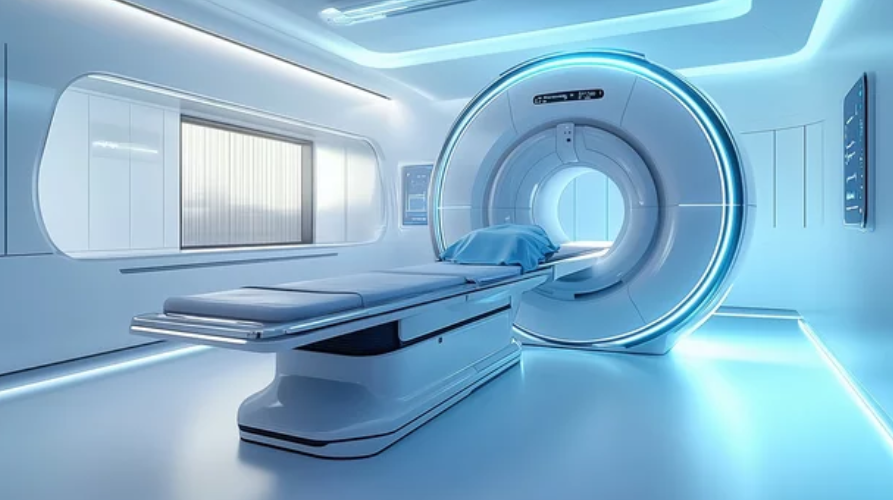
Magnetic Resonance Imaging (MRI) is one of the most advanced and widely trusted diagnostic tools in modern medicine. Every day, millions of patients worldwide undergo MRI scans to diagnose diseases, guide treatment decisions, and monitor long-term health conditions. Despite its routine use and strong clinical reputation, many patients still have concerns about MRI safety. Questions about magnetic fields, radiofrequency energy, contrast agents, and long-term health effects are common.
This evidence-based, SEO-optimized article provides a comprehensive review of patient safety and MRI. Drawing on decades of scientific research and clinical experience, it explains how MRI works, what patients are exposed to, what the evidence shows about risks, and why MRI is considered one of the safest imaging technologies available today.
Understanding MRI and Patient Safety
What Is Magnetic Resonance Imaging?
MRI is a non-invasive imaging technique that uses:
- Strong static magnetic fields
- Rapidly changing gradient magnetic fields
- Radiofrequency (RF) waves
These elements work together to produce highly detailed images of soft tissues, organs, and internal structures. MRI is particularly valuable for imaging the brain, spinal cord, joints, heart, and internal organs.
A critical safety advantage of MRI is that it does not use ionizing radiation, which is known to increase cancer risk in some medical imaging procedures.
Why Patient Safety Is Central to MRI Use
Patient safety is a foundational principle in MRI practice. MRI systems are designed with multiple layers of protection, including:
- Internationally regulated exposure limits
- Built-in monitoring of energy levels
- Strict screening procedures before scanning
These safeguards ensure that MRI scans are performed within well-established safety margins.
MRI Exposure Levels: What Patients Experience
Magnetic Field Strength and Safety Standards
Clinical MRI scanners typically operate at:
- 1.5 Tesla (T): The global clinical standard
- 3 Tesla (T): Higher-resolution imaging used in advanced diagnostics
These magnetic field strengths are significantly stronger than Earth’s magnetic field, but they are carefully controlled and extensively studied. Regulatory bodies set strict limits to ensure patient safety across all approved MRI systems.
Radiofrequency Energy and Tissue Heating
RF energy is used during MRI to generate imaging signals. This energy can cause minimal tissue heating, measured by the Specific Absorption Rate (SAR).
Key safety facts include:
- SAR limits are set far below levels that could cause harm
- MRI machines continuously monitor SAR in real time
- Automatic adjustments prevent unsafe exposure
Scientific studies consistently show that RF exposure during MRI does not cause tissue damage or long-term health effects.
What the Evidence Shows About MRI and Health Risks
MRI and Cancer Risk
One of the most persistent concerns among patients is whether MRI increases cancer risk. The evidence is clear and consistent:
- MRI has not been linked to cancer development
- No increase in cancer rates has been observed in patients undergoing repeated MRI scans
- MRI does not damage DNA or cause genetic mutations
Because MRI uses non-ionizing energy, it does not initiate the biological processes associated with radiation-induced cancer.
Long-Term Health Outcomes
Decades of follow-up studies involving millions of patients have evaluated long-term health outcomes after MRI exposure. These studies show:
- No increased risk of chronic illness
- No neurological or cognitive impairment
- No cumulative biological effects from repeated scans
Patients who require frequent MRI imaging for chronic conditions show no difference in long-term health outcomes compared to the general population.
Occupational Safety Evidence
MRI technologists, radiologists, and healthcare workers are exposed to MRI environments regularly. Long-term occupational studies demonstrate:
- No higher cancer rates among MRI professionals
- No increased incidence of neurological or cardiovascular conditions
- Strong safety outcomes when protocols are followed
This occupational evidence further supports MRI’s overall safety profile.
MRI Contrast Agents and Patient Safety
Why Contrast Agents Are Used
Some MRI scans require contrast agents to enhance image clarity. Gadolinium-based contrast agents (GBCAs) help clinicians identify tumors, inflammation, blood vessel abnormalities, and organ dysfunction.
Safety Evidence for Gadolinium-Based Contrast
Extensive clinical research shows that gadolinium contrast agents are safe for most patients. Key findings include:
- No evidence linking contrast agents to cancer
- Rapid elimination from the body in patients with normal kidney function
- Rare adverse reactions, typically mild and temporary
While small amounts of gadolinium retention have been detected in some tissues, no clinical harm or long-term disease has been conclusively linked to this finding.
Contrast Safety Protocols
To maximize patient safety, healthcare providers:
- Assess kidney function when appropriate
- Use contrast only when medically necessary
- Choose the safest available contrast formulations
These measures ensure that the diagnostic benefits of contrast-enhanced MRI outweigh any potential risks.
Patient Safety in Special Populations
MRI Safety in Children
MRI is widely used in pediatric care because it avoids radiation exposure during growth and development. Scientific evidence shows:
- No increased cancer risk in children exposed to MRI
- No adverse effects on brain development or learning
- Safe use for repeated imaging
As a result, MRI is often the preferred imaging method for children with long-term medical needs.
MRI During Pregnancy
MRI may be used during pregnancy when medically necessary. Research indicates:
- No evidence of harm to the developing fetus
- No long-term health or developmental risks
- No increased cancer risk later in life
Contrast agents are typically avoided unless the clinical benefit clearly outweighs potential risks.
Patients With Medical Implants
MRI safety screening is especially important for patients with implants. Today:
- Many implants are labeled “MRI-safe” or “MRI-conditional”
- Strict protocols guide imaging decisions
- Alternative imaging is used when MRI is unsuitable
These practices minimize risk and ensure patient safety.
Psychological and Physical Safety Considerations
Short-Term Physical Sensations
Some patients experience temporary sensations during MRI, such as:
- Loud noises
- Mild warmth
- Brief dizziness after the scan
These effects are short-lived and have no known long-term health implications.
Anxiety and Claustrophobia
Psychological comfort is also part of patient safety. Modern MRI solutions include:
- Open and wide-bore MRI scanners
- Shorter scan times
- Improved patient communication and support
These advances significantly improve patient experience without increasing exposure or risk.
High-Field MRI and Safety Evidence
Are Stronger MRI Scanners Riskier?
High-field MRI systems, such as 3T scanners, provide superior image quality. Safety studies show:
- No increase in long-term health risks
- Exposure levels remain within regulated limits
- Careful monitoring of RF energy and scan duration
High-field MRI is considered safe when used according to established clinical guidelines.
MRI Compared With Other Imaging Modalities
Safety Comparison With CT Scans and X-Rays
| Feature | MRI | CT Scan | X-Ray |
|---|---|---|---|
| Ionizing radiation | No | Yes | Yes |
| Cancer risk | None | Low but cumulative | Low |
| Long-term safety | Very high | Dose-dependent | Dose-dependent |
| Repeat imaging | Safe | Limited | Limited |
This comparison highlights why MRI is often chosen for long-term monitoring and follow-up imaging.
Common Myths About MRI Safety
Myth 1: MRI Is Dangerous Because of Strong Magnets
Fact: MRI magnetic fields are well-studied and biologically safe.
Myth 2: Multiple MRI Scans Can Harm the Body
Fact: There is no evidence of cumulative harm from repeated MRI scans.
Myth 3: MRI Exposure Causes Hidden Health Problems
Fact: Large-scale studies show no hidden or delayed health effects.
Why MRI Remains One of the Safest Medical Imaging Tools
MRI continues to be a cornerstone of diagnostic medicine because it combines:
- Exceptional image quality
- A radiation-free approach
- Strong scientific safety evidence
- Continuous technological improvements
Its ability to deliver precise diagnostic information while maintaining patient safety makes it indispensable in modern healthcare.
Conclusion: What the Evidence Clearly Shows About MRI Safety
The scientific evidence is clear and consistent: MRI is a safe medical imaging technique when performed according to established guidelines. Decades of research, millions of scans, and rigorous regulatory oversight confirm that MRI does not increase cancer risk, cause long-term health problems, or produce cumulative biological harm.
For patients, understanding the evidence behind MRI safety can reduce anxiety and build confidence in this essential diagnostic tool. Whether used for diagnosis, treatment planning, or long-term monitoring, MRI offers a powerful combination of accuracy, reliability, and patient safety.
Also Read :